

Advanced Emergency Treatments and Surgical Procedures
Urgent Care Swann Animal Clinic is a full-service dog hospital and emergency dog hospital equipped to handle a variety of advanced critical care, emergency, and urgent treatment procedures that most veterinary hospitals can't. When the unexpected happens, we're here to ensure that we have expert veterinarians, excellent medicine, and the right equipment, including dog ultrasound machines and x ray dog technology, to provide your pet with the best possible emergency dog care. Whether you are searching for a dog hospital near me or need a dog emergency room near me, we are ready to respond to dog emergency situations promptly.
Advanced Treatments:
Diabetic Ketoacidosis:
Diabetic Ketoacidosis, commonly referred to as DKA, is a serious complication of diabetes where your dog's or cat's body produces ketones caused by a lack of insulin and rising regulatory hormones. This causes the blood to become acidic and is complicated by severe dehydration. Symptoms include extreme thirst and urination, vomiting, diarrhea, 'sweet' or 'fruity' smelling breath, lethargy, abdominal pain, and panting. We can conduct diagnostic testing in our in-house laboratory to diagnose and monitor your pet. Treatment is individualized for each pet and typically includes hospitalization, IV fluids, insulin constant rate infusions, and intensive monitoring. Typical hospital stays are several days. Unfortunately, DKA is common among pets who are undiagnosed for diabetes. Once recovered from a diabetic ketoacidosis event, dietary changes, starting insulin or dose adjustments, and frequent monitoring may be indicated.
Sepsis:
Sepsis is a life-threatening condition caused by an infection in your pet's bloodstream. It generally occurs when bacteria enter your pet's blood due to an uncontrolled infection somewhere in the body and causes an entire body inflammatory response. Symptoms may include fever, loss of appetite, lethargy, panting, vomiting, and diarrhea. After diagnosis with an examination and labwork, treatment generally includes hospitalization with IV fluid therapy, IV broadspectrum antibiotics, additional supportive care pending severity such as oxygen support, possible surgery to remove the source of infection, blood pressure interventions, glucose supplementation, and other possible medications or treatments, as indicated.
Feline Hepatic Lipidosis:
Commonly called Fatty Liver Disease, Feline Hepatic Lipidosis is a buildup of fat cells in your cat's liver, leading to liver failure. This is commonly triggered by prolonged anorexia (not eating) and is frequently diagnosed in middle-aged, overweight, or obese cats. Symptoms include weight loss, lack of appetite, vomiting, diarrhea, and jaundice (yellowing of the skin, eyes, and gums). Treatment typically includes hospitalization with IV fluid therapy, administration of balanced meals (commonly through an esophagostomy feeding tube or a nasogastric feeding tube), electrolyte balancing, anti-nausea medications, medications to support the liver, and vitamin supplements as indicated. Prognosis depends on the cat's overall health, duration, and severity of the disease. With prompt care and aggressive treatment, many cats can recover from Feline Hepatic Lipidosis.
Parvo Virus Enteritis (Parvo):
Canine parvovirus, commonly referred to as "Parvo," is a highly contagious viral disease that primarily infects unvaccinated or under-vaccinated puppies and young dogs. This incredibly hard-to-kill virus lives in the environment up to a year and is rampant in the Texas Panhandle. Symptoms include lethargy, lack of appetite, depression, abdominal pain, vomiting, diarrhea, and high fever. Diagnosis is confirmed through in-house laboratory testing. Treatment can be simple or incredibly complex, depending on your pet's immune system and individual needs. This generally includes hospitalization with IV fluid therapy, IV antibiotics, anti-nausea medication, and may progress to intensive care. Treatment can become more complex, requiring plasma transfusions, feeding tubes, heat support, and other supportive nursing care. While some animals can recover with outpatient therapy, prompt and aggressive care presents the best prognosis and outcome for the pet. Left untreated or without proper care, parvovirus is commonly fatal. Learn more about parvovirus and puppy care.
Feline Panleukopenia:
Sometimes also called Feline Distemper, Feline Panleukopenia is caused by a virus in the parvovirus family. It affects unvaccinated and undervaccinated kittens and young cats; it is similar but distinct from parvovirus in dogs. Symptoms of Feline Panleukopenia include depression and listlessness, vomiting, diarrhea, and loss of appetite. Diagnosis is confirmed through in-house laboratory testing. Treatment includes vigorous IV fluid therapy, supportive nursing care, antibiotics, anti-nausea medications, and can become more aggressive depending on the severity of your kitten's condition. Unfortunately, the prognosis for kittens with Panleukopenia is grave, with the AVMA reporting survival rates for kittens in this condition being 20-51%, even with aggressive hospitalization and treatment.
Canine Blood Transfusions (Plasma, Packed Red Blood Cells, and Whole Blood)
From illness to injury, sometimes our canine companions need blood products to replace blood loss or support their bodies as they recover and heal. Swann Animal Clinic offers transfusions for plasma, packed red blood cells from universal donors, and whole blood. Donor dogs are available to be called in when necessary and are health-tested before donation.
Rattler Antivenom Administration:
Unfortunately, it is not uncommon for our pets to stick their paws or noses where they don't belong. If your pet did the Texas two-step with a rattlesnake, call and let us know you're on your way. Swann Animal Clinic keeps antivenom on hand in the event of a rattlesnake emergency. Early intervention and supportive care are crucial for securing a favorable prognosis in pets bitten by a rattlesnake.
Pneumothorax / Pyothorax Treatment (Chest Tube Placement and Management):
Many things can cause pleural space disease (accumulation of air, blood, effusion, or pus in the space between the lungs and chest wall) in your pet. No matter the cause, this is an emergency. Clinical symptoms will include respiratory distress, purple or blue gums, or collapse. Urgent Care at Swann Animal Clinic can place and monitor chest tubes as well as the underlying medical condition that led to the emergency.
Esophagostomy Tube Placement:
For a variety of diseases and conditions, our patients may require additional support in receiving essential nutrients. When they can't eat properly (such as cats suffering from Chronic Kidney Disease or Hepatic Lipidosis, or patients recovering from facial trauma or extensive dental or oral surgery), an esophagostomy tube may be placed by one of our expert veterinarians. This bypasses the pet's mouth and deposits food directly into the pet's esophagus, allowing the pet to receive the appropriate nutrients.
Diagnostic and(or) Therapeutic Abdominocentesis:
Abdominocentesis is a diagnostic and therapeutic procedure where a needle is inserted into the abdominal cavity to collect fluid for analysis or to drain excess fluid. This is done to help diagnose ascites (the accumulation of free fluid in the abdomen) and to relieve associated discomfort. This procedure does not generally require sedation or anesthesia. This diagnostic tool can also be used to help diagnose complications of heart failure, cancer, infection, or trauma
Diagnostic and(or) Therapeutic Thoracocentesis:
Similar to abdominocentesis, thoracocentesis is a procedure that removes fluid or air from the chest cavity, specifically from the space between the lungs and chest wall (the pleural space). This is used to diagnose and treat conditions such as Hemothorax (a blood-filled thorax), Pneumothorax (an air-filled thorax), Pyothorax (an infection-filled thorax), heart failure, and other related conditions.
Severe Wound and Trauma Management:
From large mass removals with incisions that cannot be closed primarily, necrotic dog fight wounds, vehicular trauma, and burns, our team is equipped to handle long-term care and management of severe wounds and trauma. Since every wound and trauma is unique, we can provide a range of services, including hydrotherapy, photobiomodulation (PBM) light therapy, laser therapy, drain placement and removal, surgical site revisions, and more. We offer wound care packages custom-tailored to each pet's individual needs.
Abdominal Ultrasound (Interpreted by Board-Certified Radiologist):
We understand the need for quick answers from professionals' opinions you can trust. We are proud to offer routine and STAT (<24 hours) abdominal ultrasounds interpreted by a board-certified radiologist.
Ultrasound-Guided Fine Needle Aspirate:
Identifying unusual masses or foreign structures on radiographs or ultrasound can be challenging. With an ultrasound-guided fine-needle aspirate, we can collect a small sample of cells and review them under a microscope or prepare them for IDEXX diagnostic review.
Advanced Surgeries:
Feline Perineal Urethrostomies:
Sometimes referred to as a PU, this procedure is performed in male cats suffering from recurring urethral obstructions. The purpose of this surgery is to create a wider urethral opening by removing the narrowest part of the urethra and allowing easier urination, along with a lower risk of re-obstruction.
Canine Pre-Scrotal/Scrotal Urethrostomies:
This surgical procedure in male dogs is performed to create a new permanent opening for urine to exit the body. It is typically performed to address urinary obstructions and involves removing either the scrotal tissue (scrotal urethrostomy) or making an incision in the prescrotal area (prescrotal urethrostomy).
Cholecystectomy:
A cholecystectomy, or gallbladder removal surgery, may be indicated if your pet is suffering from obstructive gallstones in the gallbladder, a ruptured gallbladder, Mucocele, or cholecystitis. Due to dog and cat anatomy, this surgery is not as simple as it is in human medicine. Our team is trained and ready to manage these cases, from diagnosis through post-operative recovery.
 Gastrointestinal Surgeries:
Gastrointestinal Surgeries (foreign bodies, ruptured ulcers, septic abdomen):
Gastrointestinal surgeries encompass procedures performed on the stomach and intestines to address various conditions such as gastric/intestinal foreign bodies, intussusception, ruptured ulcers, septic abdomen, tumors, resection of damaged bowel, surgical biopsy, and other gastrointestinal procedures.
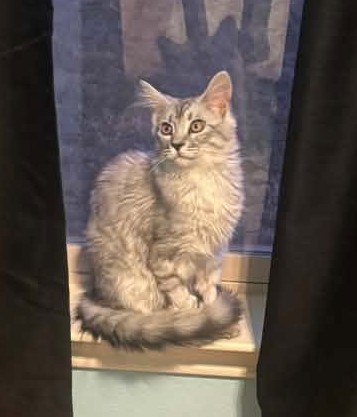
Photo featuring "Nelly" Sanders, Swann Animal Clinic patient
GDV (Gastric Dilation and Volvulus) Surgery:
Gastric Dilation and Volvulus, also known as GDV or bloat, is a life-threatening emergency where a pet's stomach rotates, blocking the entrance and/or exit, and subsequently fills with gas. This procedure typically involves untwisting and repositioning the stomach correctly, evaluating the stomach and spleen for damage, and performing a gastropexy. This is a time sensitive emergency that our team is prepared to handle at any time.
Diaphragmatic Hernias:
A diaphragmatic hernia is a hole in the pet's diaphragm, allowing the abdominal organs to migrate to the chest cavity. There are generally two types of diaphragmatic hernias: traumatic (caused by an event that tears the diaphragm) or congenital (pets born with a birth defect affecting the diaphragm).
Pyometra Treatment:
Pyometra in dogs is a serious, life-threatening uterine infection in unspayed female pets. If left untreated, this condition can result in uterine rupture, sepsis, peritonitis, and death. While causes can vary, many are triggered by hormonal changes, which make the uterus more susceptible to bacterial infection, often following a menstrual (heat) cycle. There are two types of infection: open (characterized by purulent discharge draining from the uterus) or closed (in which the infection collects in the uterus, causing increased abdominal swelling, pain, and discomfort). Our Urgent Care clinic is equipped to perform stabilization, emergency ovariohysterectomy, hospitalization, and post-operative care for patients suffering from pyometra.
Cystotomy:
A cystotomy is a surgical procedure in which an incision is made into the pet's urinary bladder, typically to remove bladder stones, masses, blood clots, and other obstructions
Abdominal Mass Removal:
It is not uncommon for pets to develop intrabdominal masses affecting specific organs. While some may be benign, our Urgent Care veterinarians are skilled at removing a variety of abdominal masses, including: splenectomies, nephrectomies, and liver lobectomies.
Splenectomy: A splenectomy is a surgical procedure to remove the spleen in order to address conditions like rupture, tumors, and trauma. While the spleen plays a crucial role in the immune system of pets, helping to store blood, dogs and cats can still live without their spleen. Splenectomies are sometimes required in cases of GDV (Gastric Dilatation Volvulus). If a splenic mass is cancerous, the prognosis will vary.
Liver Lobectomies: The liver is made up of six lobes. If a tumor has developed in the liver of your pet, a liver lobectomy is often indicated as the safest course of action to prevent the spread of cancer. Up to 70% of your pet's liver may be safely removed as the organ regenerates.
Nephrectomies: Like humans, dogs and cats can live with one kidney. In the event of irreversible kidney damage, trauma, severe infection, cancer, ureteral conditions, hydronephrosis, kidney abscesses, or renal dysplasia, a nephrectomy may be indicated.
Orthopedic Amputations & Fracture Repair:
Amputations: It is unfortunate, but in the event of severe trauma, bone cancers, and some other conditions, fore- or hind-limb amputation may be indicated. Swann Animal Clinic is equipped to perform these procedures, allowing for the alleviation of pain and an improvement in the pet's quality of life. May dogs and cats adapt well to living with three legs and many continue to lead active and happy lives.
Fracture Repair: When a dog or cat breaks or fractures a bone, surgical repair may be indicated. Each break and fracture is unique and requires a specific approach to repair. In most cases, we are equipped to handle a variety of orthopedic surgeries at Urgent Care. For some conditions, referral to an orthopedic surgeon may be indicated.
Enucleations:
An enucleation is a surgical procedure to remove the severely damaged, infected, diseased, or otherwise traumatic injury to a dog or cat's eye. Enucleation includes the removal of the pet's eyeball and surrounding tissues. This surgery is performed only when medically necessary and is used as a last resort to alleviate pain and suffering.