

CHAPTER 8-2. - ANIMALS AND FOWL
Footnotes:
--- (1) ---
Cross reference— Animal control board, § 2-6-26 et seq.
State Law reference— Home rule powers, V.T.C.A., Local Government Code § 51.071 et seq.
ARTICLE I. - IN GENERAL
Sec. 8-2-1. - Definitions.
The following words, terms and phrases, when used in this chapter, shall have the meanings ascribed to them in this section, except where the context clearly indicates a different meaning:
Adult Dog or Cat: Means a dog or cat over the age of four months.
Animal: Any live, nonhuman, vertebrate creature, be it domestic, wild, Livestock, reptile, or other.
At Large: Any Animal not restrained, including without limitation Domestic, Wild, and Livestock Animals as defined herein and Estrays as defined in state law.
Adoption Program: A program in which permanent custody of an animal is transferred to a private individual. 501(c)(3) non-profit animal rescue organization, or placement in a temporary foster home pending transfer of permanent custody.
Animal Management & Welfare officer: (a) An employee of the City of Amarillo Animal Management & Welfare Department authorized to enforce all ordinances and state laws pertaining to the ownership, care, and management of Animals by exercising lawful authority to issue citations, notices of violation, and seizing Animals, and obtaining warrants or court orders pertaining to Animals; (b) any Texas peace officer acting to enforce this chapter or state laws pertaining to Animals.
Barnyard Fowl: Means and includes chickens, ducks, geese, peacocks, guineas, and turkeys.
Breeder: Means a person who breeds dogs or cats and transfers possession of more than one litter, or any part thereof, in a twelve-month period.
Community Cat Colony: Means a group of Community Cats that live together in one (1) territory and are managed by a community organization authorized by the Director.
Community Cat: Means. a feral cat or undomesticated cat that is not socialized for interaction with humans.
Community Cat Caretaker: Means any person other than an owner who provides, food, water, or shelter to, or otherwise cares for, a Community Cat.
Dangerous Animal: Any Animal shall be deemed dangerous upon the occurrence of any of the following events:
(1)An unprovoked attack on a person, Domestic Animal or Livestock, causing serious bodily injury, by an Animal outside a secure enclosure in which the attacking Animal is kept;(2)An unprovoked act of aggression by an Animal outside a secure enclosure which causes a person to reasonably believe the Animal will attack and cause serious bodily injury to a human or to a Domestic Animal or Livestock:(3)Certification by a Doctor of Veterinary Medicine that an Animal poses a danger to human life, Animal life, or property based on a reasonable medical probability after observation.
Department: Means the department of Animal Management and Welfare for the City of Amarillo.
Domestic Animal: Those Animals which are naturally tame and gentle or which, by long association with man, have become thoroughly domesticated and are now reduced to such a state of subjection to his will that they no longer possess the disposition or inclination to escape. This definition specifically includes household pets, such as dogs and domesticated cats and pigeon, rabbit, other bird or fowl not regulated or defined elsewhere, and miniature Animals. Domestic Animals do not include Community Cats as defined herein.
Eartipped: means straight-line cutting of the tip of the left ear of a cat while the cat is anesthetized.
Kennel: Any place where five (5) or more Animals, not wild, livestock, or estray, over the age of four (4) months, are raised, trained, boarded, harbored or kept. A farm, ranch, horse lot private or commercial, private stable, veterinary clinic, Animal hospital and an Animal pound as defined in the Zoning Ordinance are specifically excluded from this definition.
Livestock: Any species or family of bovine, ox, cattle, swine, pig, horse, equine, tapir, elephant, deer, or antelope; other grass or plant-eating single or cloven-hooved mammals, (whether indigenous to this state or not): any species or family of emu, ostrich or any other Animal (not listed in this ordinance as Domestic, Wild, or Barnyard Fowl) which may be raised for human consumption in the United States of America; and, any Animal designated or defined by state law as an Estray when straying or at large.
Microchip: A passive electronic device that is injected into an Animal by means of a hypodermic-type device. Each microchip must contain a unique and original number that is readable by an electronic scanning device for purposes of Animal identification. The microchip shall be supplied with a tag that must be attached to the Animal's collar to notify others of the presence of the microchip.
(1) A Microchip implanted in a Community Cat that is part of a Trap, Neuter, and Return (TNR) Program will be registered to the Territory where the Community Cat lives; an owner's name will not be required for registration. Under this subsection, the purpose for micro-chipping is to track any and all medical procedures and vaccinations, and provide a location to return the Community Cat to in the event return is needed. A Community Cat that is part of a TNR Program is exempt from the requirement above requiring a Microchip tag be attached to the Animal's collar.
Miniature Animals: Those Animals, not wild or livestock, which when fully grown do not exceed eighteen (18) inches in height at shoulder level and weigh no more than ninety (90) pounds are considered to be miniature.
Neutered: Means any Animal, male or female rendered incapable of breeding or being bred.
Owner: (1) A person who owns, keeps, harbors, controls (physically or by verbal or hand commands), feeds, shelters or aids any Animal; or (2) A person who is the Owner's agent left in charge of an Animal; or (3) A person who states that he or she will be responsible for an Animal. If the Owner of an Animal is under the age of seventeen (17) years, then the head of the household of such person under age seventeen (17) is deemed to be an Owner and responsible for the Animal. There is a rebuttable presumption that any person who owns, keeps, harbors, controls, feeds, shelters or aids any Animal for three (3) consecutive days or more is an Owner for purposes of this Article.
(1)Exception: A person is not an Owner of a Community Cat if that person is engaged in activities specifically related to an approved Trap, Neuter, and Return (TNR) Program.
Restrain: Any Animal shall be deemed to be restrained when it is:
(1)Confined on the Premises of the Owner within a fenced enclosure, capable of confining the Animal;(2)Fastened, tethered, or picketed by a lead, rope, cable, strap, or other non-chain material so as to keep the Animal on the Premises of the owner and at least three (3) feet from the edge of any public street, alley, or sidewalk, as measured from the interior edge of the street, alley, or sidewalk, as applicable, being opposite from the curbside of the sidewalk, to the end of the lead, rope, or tether;(3)Under the control of a person by a leash;(4)Within a vehicle being driven or parked; or(5)On the premises of the Owner or keeper and is obedient to and under control of oral command.
Rooster: A male domestic fowl or cock.
Serious bodily injury: Means an injury characterized by severe bite wounds or severe ripping and tearing of muscle that would cause a reasonably prudent person or Animal Owner to seek treatment from a medical professional or veterinarian and would require hospitalization or clinic treatment without regard to whether the person actually sought medical treatment or veterinarian services.
Set: To keep in a place where an Animal can gain access to it.
Sterilized: See, Neutered.
Territory: Means a zip code within the City of Amarillo.
Trap, Neuter, and Return (TNR) Program: Means a program approved by the Director or designee of a community organization approved by the Director which community Cats are captured, evaluated, vaccinated for Rabies, neutered, micro-chipped, ear tipped, and returned to the trap location in order to encourage the stabilization of the free-roaming cat population in the city.
Wild Animal: Those Animals of a wild nature or disposition so as to require to be reclaimed and made tame by art, industry or education, or else must be kept in confinement to be brought within the immediate control of the Owner. Without limiting the general definition just stated, this term specifically includes venomous reptiles, a wolf hybrid, or any non-Domestic Animal whose normal body weight at maturity is typically fifteen (15) pounds or more.
(Code 1960, § 4-1; Ord. No. 5585, § 2, 4-8-86; Ord. No. 5929, § 1, 10-15-91; Ord. No. 5990, § 1, 12-15-92; Ord. No. 6591, § 1, 4-16-2002; Ord. No. 6971, §§ 2, 3, 7-25-2006; Ord. No. 7017, § 1, 1-23-2007; Ord. No. 7020, § 1, 2-6-2007; Ord. No. 7461, § 1, 6-3-2014; Ord. No. 7481, § 2, 9-2-2014; Ord. No. 7599, § 1, 4-26-2016; Ord. No. 7630, § 1, 11-22-2016; Ord. No. 7656, § 1, 3-14-2017; Ord. No. 7670, § 1, 6-20-2017; Ord. No. 7914, § 2, 4-13-2021; Ord. No. 8016, § 3, 9-27-2022)
Cross reference— Definitions to apply throughout Code, § 1-2-1.
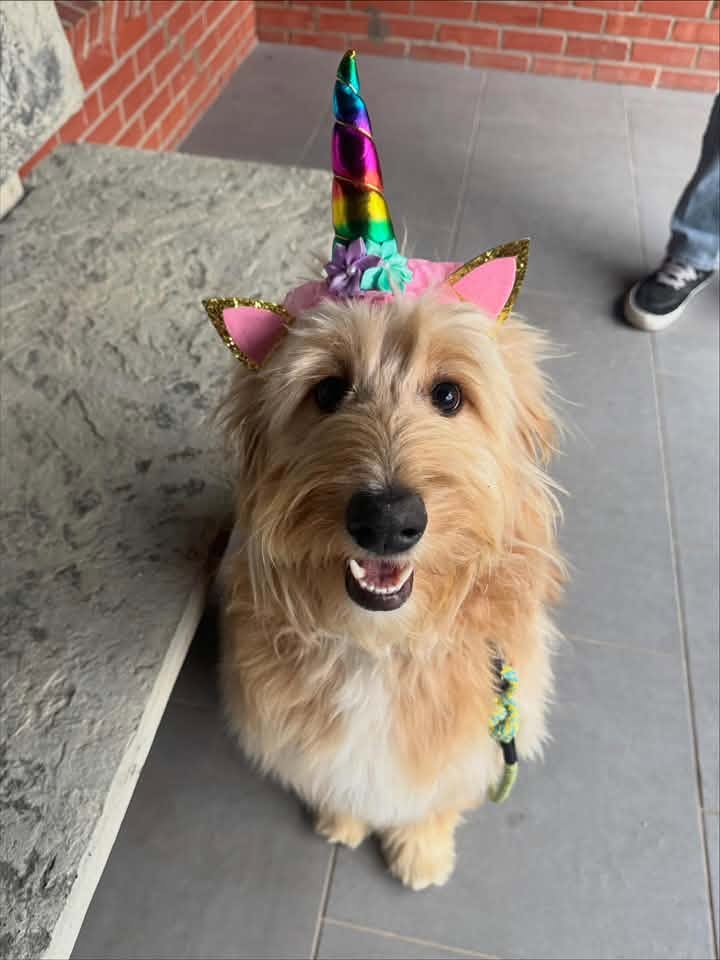
Photo featuring Bogey Friemel, Swann Animal Clinic patient.
Sec. 8-2-2. - Enforcement.
A City of Amarillo Animal Management & Welfare Officer is authorized to enforce all ordinances and state laws pertaining to the ownership, care, and management of Animals by exercising lawful authority to issue citations or notices of violation, seizing Animals, and obtaining warrants or court orders pertaining to Animals. Such authority is also extended to any Texas peace officer acting to enforce this chapter or state laws pertaining to Animals.
(Ord. No. 7462, § 1, 6-3-2014; Ord. No. 7481, § 2, 9-2-2014)
Sec. 8-2-3. - Records.
It shall be the duty of the Animal Management & Welfare Department to keep, or cause to be kept, accurate and detailed records of the following:
(1)Impounding and disposition. Impoundment and disposition of all Animals coming into its custody. Such records shall be kept for a period of at least three (3) years and shall give the description of all Animals impounded, date of impounding, date of sale or other disposition, the amount realized for such Animal and the name and address of the purchaser.(2)Bite cases. All bite cases reported to it and its investigation of same.(3)Monies received. All monies received under the provisions of this chapter. Such records shall be open to inspection at reasonable times by persons responsible for similar records of the City, and shall be audited by the City Auditor annually in the same manner as other City records are audited.
(Code 1960, § 4-5; Ord. No. 5585, § 2, 4-8-86; Ord. No. 7481, § 2, 9-2-2014)
Sec. 8-2-4. - Fees.
(a)Impoundment fees. Any Animal impounded under the provisions of this chapter may be reclaimed by the Owner or person taking custody of such Animal upon complying with section 8-2-54 of this chapter and payment of the following fees:(1)Impoundment of any Animal: Fifty dollars ($50.00) intact; thirty dollars ($30.00) spayed/neutered. This fee only shall be refunded upon satisfactory proof that the violating Animal is spayed/neutered within sixty (60) days after being reclaimed. Refund has no effect on any citation issued for violation.(2)Impoundment of livestock: Double the fees listed in (1), per head.(3)Daily care fees (excluding first day of impoundment): Five dollars ($5.00) per day.(4)Microchip implant for animal not having one, upon redemption, transfer, adoption: Labor fifteen dollars ($15.00), plus market cost of chip.(b)Other fees:(1)Rabies or erysipelas vaccination fee, pursuant to section 8-2-8 (veterinarian receipt) .....$20.00(2)Registration of Dangerous Animal .....100.00(3)Bite Animal, impoundment and observation, 10 days .....100.00(4)Pathological examination .....50.00(5)Small Animal trap, deposit (refundable upon timely return) .....90.00(6)Vaccination at intake, Animal medical treatment: .....a.Vaccination (therapeutic or prophylactic), immunization fee (or actual cost whichever is more) .....10.00b.The owners of animals at the shelter requiring veterinarian services shall be charged the cost of the veterinarian fees. .....(7)Surrender Fee: .....
Adult pet (over 6 months) .....25.00
Per puppy or kitten .....10.00
Spay-a-Mama Program .....40.00
(8)Adoption Fee - Canine .....50.00
Adoption Fee - Feline .....30.00
Adoption Fee - Barn Cat .....10.00
Adoption Fee - Chicken .....10.00
Adoption Fee - Small animal .....15.00
(9)Replacement Rabies Tag .....5.00(c)Computation of boarding day: For fee charge computation purposes, each boarding day shall begin at 12:01 p.m. The daily fee rate shall be applicable when an Animal is kept for any portion of a day.
(Code 1960, §§ 4-30—4-32; Ord. No. 5585, § 2, 4-8-86; Ord. No. 5675, § 1, 4-14-87; Ord. No. 5794, § 1, 3-21-89; Ord. No. 5990, § 2, 12-15-92; Ord. No. 6142, § 1, 3-30-95; Ord. No. 6406, § 1, 3-23-99; Ord. No. 6591, § 1, 4-16-2002; Ord. No. 6971, § 4, 7-25-2006; Ord. No. 7124, § 3, 9-23-2008; Ord. No. 7295, § 4, 9-20-2011; Ord. No. 7492, § 3, 9-30-2014; Ord. No. 7500, § 3, 12-22-2014; Ord. No. 7599, § 2, 4-26-2016; Ord. No. 7656, § 2, 3-14-2017; Ord. No. 7761, § 13, 9-18-2018; Ord. No. 7883, § 21, 9-15-2020; Ord. No. 7943, § 1, 1-11-2022; Ord. No. 8016, § 4, 9-27-2022)
Sec. 8-2-5. - Nuisance Animals.
(a)It shall be unlawful for any person to own or maintain an Animal in such a manner as to constitute a public nuisance. The following acts shall constitute a public nuisance:(1)Failure to restrain an Animal, except and unless the Animal is under control and obedience to oral command while in the course of: A. duties or training as a working or service Animal; training for obedience trials; field trials, agility, dog shows, tracking work, or search and rescue work or training; or, B. performing in an organized exhibition or training event that is held in a public venue or business; or, C. in a designated "leash-free" area of a park.
Cross reference— Penalty exception, § 1-1-5(d).
(2)Damage to property caused by an Animal against the wishes of the owner of the property.(3)Maintaining a Domestic Animal or Livestock in an unsanitary environment which shall include, but not be limited to, the failure to remove urine and feces daily from the confinement area to minimize the breeding of flies and rodents (Ord. No. 5929, § 2, 10-15-91)(4)Permitting an Animal to bark, whine, howl, crow, cackle or make any other noise which causes annoyance or interference with the reasonable use and enjoyment of a Premises;
Cross reference— Penalty exception, § 1-1-5(d).
(5)Herding of Animals along or upon any Public Right-of-way, except by any officer, agent or employee of the federal, state or local government or agency thereof, if such herding is done in the performance of his official duties;(6)The maintenance of a Kennel in violation of Chapter 4-10.
(7)Maintaining a Dangerous Animal within the city limits in violation of the requirements stated in Section 8-2-10(a).(b)It shall be a nuisance and unlawful for any person to keep swine within the limits of the City, except for the keeping of swine under direct supervision by and upon the premises of public and private schools, fairs, or livestock shows and with the exception of Miniature pigs, in which case no more than two (2) Miniature pigs (no litters) may be kept as pets in any one (1) household. Miniature pigs shall be spayed or neutered on or before the age of three (3) months. No adult male Miniature pig may be kept under this provision unless his tusks have been surgically removed.(c)All Domestic Animals authorized to be kept shall be confined to the Premises of the Owner or custodian of such Domestic Animal, and it shall be unlawful for any person to allow such Domestic Animal to run or fly at large, or go upon the Premises of another person, or to allow any shelter or cage for any Animal to be located in violation of applicable Building Setback Lines, as set forth in the Zoning Ordinance. No Domestic Animal, other than a dog or cat, shall be kept within a Front Yard in a one-family or two-family Dwelling District as these terms are defined in the Zoning Ordinance.(d)It shall be a nuisance and unlawful for the Owner or custodian of any Animal which has been killed or died, and which is not intended as food for human consumption, to permit or suffer any such dead Animal to remain upon any Premises.(e)It shall be a nuisance and unlawful to keep any Livestock within the City limits unless such Animal is kept in a horse lot (private or commercial), or other use as authorized in the Zoning Ordinance. For purposes of this subsection, the term "livestock" shall include horses, donkeys, mules, goats, sheep and other Animals of the ox kind or bovine species.(f)It shall be unlawful to keep Barnyard Fowl within the City limits, except: at a location zoned for Industrial, Agricultural, or Heavy Commercial use; or, up to four (4) Barnyard Fowl per quarter-acre may be kept at a location otherwise zoned provided that the location is not less than one-quarter acre in size.(g)It shall be unlawful for a chicken flock to have more than twenty-five (25) percent male birds (roosters).(h)Flocks that consist of less than four (4) birds may not have more than one (1) rooster.(i)Flock size limitation shall not apply to a governmental entity or a non-profit organization.
(Code 1960, § 4-2; Ord. No. 5585, § 2, 4-8-86; Ord. No. 5990, § 3, 12-15-92; Ord. No. 6591, § 1, 4-16-2002; Ord. No. 6971, § 5, 7-25-2006; Ord. No. 7017, § 2, 1-23-2007; Ord. No. 7020, § 2, 2-6-2007; Ord. No. 7502, § 1, 1-20-15; Ord. No. 7630, § 2, 11-22-2016; Ord. No. 7670, § 2, 6-20-2017)
Sec. 8-2-6. - Inhumane treatment; unlawful restraint; statutes; presumptions; definitions, enforcement.
(a)Inhumane treatment.(1)The provisions of Texas Penal Code Sections 42.09, 42.091, 42.092, 42.10, and 42.105 each as amended, are hereby incorporated into this article. Where any provision of this article conflicts with these incorporated state laws and cannot be harmonized, then state law shall prevail.(2)To supplement and aid the incorporated statutory provisions and definitions of state law, the following definitions are enacted to further inform and define such Penal Code offenses occurring within the City limits, when such is prosecuted pursuant to this article:a.Water. Liquid water; reasonably free of algae blooms, dirt, and debris.b.Shelter. Access to structure that is suitable for the species, age, condition, size, and type of each Animal; and, protects each Animal from rain, sleet, snow, hail, wind and direct sunlight; with no accumulation of excrement, wasted food, or other debris; and, for dogs and cats, provides a solid surface, resting platform, pad, floor mat, or similar device that is large enough for the Animal or Animals intended to occupy to be able to lie upon in a normal manner and can be maintained in a sanitary manner.c.Food. Provision of such food as is appropriate in approximate quantity and type, suitable for the Animal's species, size, and age, as to sustain good health.(3)Presumptions. For violations arising under this section, there is a rebuttable presumption that:a.Food that is inaccessible to the Animal's mouth is neither adequate nor the necessary food as required by the incorporated statute or this article.b.Water that is either frozen, exhibits unreasonable algae bloom or dirt, contained within a hole in the earth, or is located so as to be inaccessible to the Animal's mouth is neither adequate nor necessary water as required by the incorporated statute or this article.c.Shelters with wire, grid, or slat floors that: (i) permit the Animal's feet to pass through the openings; or (ii) sag under the Animal's weight; or (iii) otherwise do not protect the Animal's feet or toes from injury, is neither adequate nor necessary shelter as required by the incorporated statute or this article.d.Care that confines an animal and exposes the animal to temperatures detrimental to the health of the animal is neither adequate nor necessary care as required by the incorporated statute or this article.(4)Ear cropping and tail docking.a.For purposes of this section: Ear cropping means the re-shaping of an Animal's ear by removing any part thereof by surgery or other means; and tail docking means the amputation of all or part of an Animal's tail by cutting, crushing, or other means. Subject to the stated exception, ear cropping and tail docking are each declared to be cruel and inhumane treatment of an Animal.b.It is an offense:1.For any person to perform ear cropping or tail docking, except as allowed in this subsection.2.For an Animal Owner to perform or allow ear cropping or tail docking of his or her Animal, except by a person authorized in this subsection.c.Exception: It is not an offense when ear cropping or tail docking are performed by a licensed veterinarian or one acting under the supervision of a veterinarian in a clinical setting.(b)Unlawful restraint; tethering.(1)Texas Health and Safety Code, Chapter 821, Subchapter D, "Unlawful Restraint of Dog," as amended, is hereby incorporated into this article. Where any provision of this article conflicts with this incorporated state law and cannot be harmonized, then state law shall prevail.(2)To supplement and aid the incorporated statutory provisions and definitions, the following definitions and restrictions are enacted to further inform and define such offense occurring within the City limits, when such is prosecuted pursuant to this article:a.Restraint. In addition to the requirements of incorporated statute, a rope, tether, cable or other similar device or material must have a swivel at each end and not unreasonably interfere with the dog's access to water, food and shelter.b.Attachment. The restraint or tether shall be attached to the dog by a harness or properly fitted collar. However, in no event shall a restraint tether be attached to a dog by a choke collar, prong collar, or chain used as a collar.c.Chain. Chain is not an acceptable material for purposes of a tether restraint and such is hereby prohibited. This prohibition does not apply to a handheld leash used while walking a dog.(3)Negation of defense or excuse. Tethering is one available technique for confining an Animal to avoid it from being At-Large. The failure of any component of a tether system to restrain an Animal is not a defense to an Animal At-Large offense. Such a failure does not relieve or excuse an Owner from the legal duty to prevent an Animal from being At-Large.(c)Investigation and prosecution. Upon discovering or being notified by any person that an Animal is or may be treated cruelly or inhumanely, or that a dog is unlawfully restrained or tethered, then an Animal Management & Welfare Officer or peace officer shall investigate such report. If probable cause is found for an allegation of cruelty to an Animal or unlawful restraint of a dog, then the Animal Management & Welfare Officer or peace officer may issue a citation for violation of this section for prosecution in municipal court, or refer the matter to the county or district attorney for prosecution, or seize the Animal pursuant to Texas Health and Safety Code Chapter 821, or a combination of these.(d)Procedures. The Animal Management & Welfare Officer shall follow Texas Health and Safety Code Chapter 821, Subchapter B, as amended, or successor statute, as it relates to hearings, seizure, appeals, and disposition of allegedly cruelly treated Animals is hereby incorporated by this reference into this Article for use by the Animal Management & Welfare Officer. The provisions of the several statutes incorporated by reference in this article are cumulative of remedies for violation of this Code of Ordinances, and the use of one does not preclude use of another, unless otherwise provided by law.
(Code 1960, § 4-3; Ord. No. 5585, § 2, 4-8-86; Ord. No. 6406, § 1, 3-23-99; Ord. No. 6591, § 1, 4-16-2002; Ord. No. 7461, §§ 2, 3, 6-3-2014; Ord. No. 7481, § 2, 9-2-2014; Ord. No. 7599, § 3, 4-26-2016)
Sec. 8-2-7. - Striking Animal with vehicle; setting traps; artificially coloring Animals.
(a)Any person who, as the operator of a motor vehicle, strikes a Domestic Animal or Livestock shall immediately report such injury or death to the Animal's Owner. If the Owner is unavailable, then such report shall be made to either the Animal Management & Welfare Department, Amarillo police, or county sheriff. It is an offense to fail to immediately make the report required of this subsection. In a prosecution of an offense under this section, it is presumed that the registered owner of the motor vehicle that is the subject of the prosecution is the person who was driving the vehicle at the time and place the offense occurred.(b)(1)No person shall set up or allow to be set up on his property steel jaw traps, spring traps with teeth or perforated edges on the holding mechanism, snares, or any type of trap with a holding mechanism designed in such a fashion as to reasonably ensure the cutting, slicing, tearing or otherwise traumatizing the entrapped animal, for the purpose of ensnaring any animal within the city limits, unless the use of such traps is specifically deemed necessary by the Animal Management and Welfare director or designee for the control of communicable disease. This section is not to be construed to include those traps designed to kill common rodents, i.e., rats, mice, gophers and groundhogs; except that the owner is responsible for taking care that any of the above said "rodent" traps are not placed or used on or about his property in such a manner as to reasonably ensure the trapping of any other domesticated or wild animal, or of a human.(2)A person may set up or allow to be set up on his own property humane traps used to capture dogs, cats, and other small animals alive which must be sheltered and shall be checked at least once every eight (8) hours by the owner of the property on which the trap is set. Traps shall be designed in a manner to prevent injury to the trapped animal and will be maintained in a manner that prevents injury to the person emptying the trap. Humane care shall be provided for any trapped animal including the provision of food, water, and protection from extremes of the environment including heat, cold, and precipitation as specifically provided in this Article. Trapped dogs or cats bearing identification shall be turned over to the Animal Management and Welfare or the animal's owner. For purposes of this section, the owner of the property on which the trap is set shall be the responsible party for maintenance of the trap, providing humane care to the trapped animal, and the notification of Animal Management and Welfare.(c)No person shall dye, color or otherwise artificially color any rabbit, baby chick, duckling or Domestic Animal to enhance the likelihood of the animal being sold.(d)A rabbit, baby chick, duckling or Domestic Animal may be dyed utilizing a species specific, species approved, and species safe dye to enhance the appearance of the animal if ownership shall be retained until dye is no longer present.
(Code 1960, § 4-6; Ord. No. 5585, § 2, 4-8-86; Ord. No. 6591, § 1, 4-16-2002; Ord. No. 7599, § 4, 4-26-2016; Ord. No. 7670, § 3, 6-20-2017)
Sec. 8-2-8. - Vaccination.
No person shall own, keep or harbor a dog, cat, or Miniature pig (over the age of (3) months), within the City limits unless the dog or cat shall have been vaccinated with antirabies vaccine and the Miniature pig shall have been vaccinated for erysipelas, by a licensed veterinarian. Miniature pigs shall be so vaccinated, at one-year intervals, from the initial date of first vaccination. As a minimum, dogs and cats shall be so vaccinated at the ages and intervals specified by regulations, as amended, of the Texas Department of Health or its successor agency.
(Code 1960, § 4-7; Ord. No. 5585, § 2, 4-8-86; Ord. No. 5990, § 4, 12-15-92; Ord. No. 6406, § 1, 3-23-99; Ord. No. 6591, § 1, 4-16-2002; Ord. No. 6667, § 1, 8-11-2003)
Cross reference— Penalty exception, § 1-1-5(d).
Sec. 8-2-9. - Vaccination tag.
Upon complying with the vaccination provisions of this chapter, there shall be issued to the Owner a numbered metallic tag stamped with the number and expiration year. Dogs and cats shall at all times wear the current rabies vaccination tag issued to that Animal. The Owner or person in possession of a Miniature pig may not keep such Animal within the City of Amarillo without being able to provide proof of vaccination required by this chapter.
(Code 1960, § 4-8; Ord. No. 5585, § 2, 4-8-86; Ord. No. 5990, § 5, 12-15-92; Ord. No. 6591, § 1, 4-16-2002; Ord. No. 6667, § 2, 8-11-2003; Ord. No. 7630, § 2, 11-22-2016; Ord. No. 7656, § 3, 3-14-2017)
Cross reference— Penalty exception, § 1-1-5(d).
Sec. 8-2-10. - Dangerous Animals.
(a)As a public safety requirement. It shall be unlawful for any person to keep or harbor any Dangerous Animal within the corporate limits of the City of Amarillo without complying with all requirements of the Texas Health and Safety Code, § 822.042, as amended, whether the Dangerous Animal be a dog or of another species. In addition, the Owner must comply with each of the following local requirements, at the Owner's expense, before the Dangerous Animal is released from the Animal Management & Welfare facility and continuously thereafter while the Dangerous Animal is kept within the City limits:(1)Obtain liability insurance coverage or show acceptable proof of financial responsibility in an amount of at least two hundred fifty thousand dollars ($250,000.00) to cover damages that result from an attack by the Dangerous Animal causing bodily injury to a person or for damages to any person's property resulting from the keeping of such Dangerous Animal. The Owner shall be responsible for annually providing a copy of the insurance policy along with any applicable rider, that evidences the required insurance coverage. Such copy shall be filed with the Animal Management & Welfare Department upon redeeming the Animal and thereafter annually until such time as the Animal is deceased or is permanently relocated and housed outside the city limits. The Owner shall keep such insurance or financial responsibility in full force at all times required by this section, and assure that a current copy of such active insurance policy or other financial responsibility, with any applicable rider, is on file at the office stated above. The City may contact the insurance agent or company, bank or other party to verify the required insurance or proof of financial responsibility has not been reduced, dissipated, cancelled, lapsed, expired or otherwise impaired or terminated during the purported term of the policy or financial proof then on file. Failure or refusal of the Owner to have and maintain such required insurance coverage or proof of financial responsibility in full force and effect, or to timely provide the required annual copy of same is a violation of this section and an offense.(2)Register with the City of Amarillo by providing the name and address of the Owner; the breed, age, sex, color and any other identifying marks of the Animal; the location where the Animal is to be kept if it is not at the address of the Owner; and two (2) color photographs that clearly identify the Dangerous Animal;(3)Have the Animal sterilized by a licensed veterinarian clinic located in Randall or Potter County as approved by the Director or designee of Animal Management & Welfare.(4)Construct a cage, pen or enclosure for the Dangerous Animal that has secure sides; a secure top attached to the sides; and a secure bottom which is either attached to the sides or else the sides of the structure must be embedded in the ground no less than two (2) feet. The pen or enclosure must be completely encircled by a fence constructed in such a manner as to prevent a person or child from being able to reach the Animal's pen or enclosure;(5)Not allow the Animal to go outside of its cage, pen or enclosure unless the Animal is under physical restraint. No person shall permit a Dangerous Animal to be kept outside of its cage, pen or enclosure on a chain, rope or other type of leash unless a person is in physical control of the chain, rope or leash and the person is of competent strength to control the Animal at all times. Dangerous Animals shall not be leashed to inanimate objects, such as trees, posts, buildings, etc. All Dangerous Animals outside their cage, pen or enclosure must be securely fitted with a muzzle that will not cause injury to the Animal nor interfere with its vision or respiration but shall prevent the Animal from biting other Animals or human beings;(6)Post signs giving notice of a Dangerous Animal on the premises in which such Animal is confined. Such signs shall be conspicuously posted at both the front and rear property entrances and shall bear letters not less than two (2) inches high, stating "DANGEROUS ANIMAL ON PREMISES." Such signs shall also display a symbol, that is understandable by small children, that warns of the presence of a Dangerous Animal;(7)Attach a fluorescent orange tag provided by the Animal Management & Welfare Department to the Animal's collar that is worn at all times so that the Animal can be easily identified;(8)Implant a microchip into the Animal which is compatible with scanning equipment used by the Animal Management & Welfare Department, and register it for life with the City's Animal Management & Welfare Department and a recognized national Animal registry;(9)Pay the appropriate Dangerous Animal permit fee annually, not later than five (5) business days prior to the annual expiration renewal date; and,(10)Pay the impoundment and daily care fees accrued during the investigation and any appeal of the Dangerous Animal determination process; and,(11)Present proof of current vaccination or pay the fee for vaccination.
In the event the Owner or keeper fails or refuses to comply with these requirements in accordance with state law, then the Dangerous Animal may be seized and disposition made in accordance with this Section.
(b)Complaint. When a person reports a dangerous Animal to the Animal control authorities, the authorities shall investigate the report and notify the Owner of the report. The Animal control authority shall obtain a sworn written statement from at least one witness, describing at a minimum: the Animal, the facts of the complaint, identity of any other known witnesses, and other information necessary or helpful to the investigation.(c)Investigation. The Animal Control Authority or designee Animal Management & Welfare officer shall conclude the investigation no longer than ten (10) days after receipt of the report or sworn statement, which ever occurs later. Upon completion of investigation the Animal control authorities shall either:(1)Close the case if it is determined that the report or complaint is unsubstantiated; or(2)Declare the Animal to be a Dangerous Animal.(d)Seizure pending disposition. Upon sworn application of the Animal control authorities or a peace officer stating probable cause that the Animal is dangerous and there is some reason to believe that the Animal may endanger other persons or Animals before the investigation and any hearings or appeals can be completed, then a municipal court judge may issue a warrant authorizing the Animal control authorities or peace officer to: (i) retain the Animal if it has been captured at large or, (ii) enter a building, dwelling, other structure or enclosure to seize the Animal and detain same, until disposition of the investigation and any hearing and appeal.(e)Notice. The Animal Control Authority or designee shall promptly notify the Owner or keeper of the Animal of his or her determination on the dangerousness of the Animal, by a written notice mailed to or posted on the front door of the last known address of the Owner or keeper or other means reasonably calculated to give actual notice of the determination to the Owner.(f)Appeal.(1)Initial Determination. The Owner or keeper may appeal the Dangerous Animal determination by filing a written notice of appeal to Municipal Court within fifteen (15) days after the determination, for a trial de novo. The consequences of the determination shall be suspended pending the Municipal Court Judge's final decision, and the Department shall retain the custody and care of the Animal until all appeals of initial determination of Dangerous Animal are exhausted. An Owner may appeal a decision of the municipal court to the county court at law, in accordance with Chapter 30 of the Texas Government Code, as amended. Following a final judicial determination that the Animal is dangerous, each day the Owner fails or refuses to comply with Sec. 8-2-10(a), shall constitute a separate violation of this chapter. The owner shall pay all costs of impoundment including, food, veterinarian bills, vaccinations, and other costs incurred by the Department for the care of the animal until such time as the Owner complies with 8-2-10(a) or removes the Dangerous Animal form the city limits.(2)Subsequent Hearing and Retention of Dangerous Animal; costs. The Animal Management and Welfare Department shall retain custody and care of a previously determined Dangerous Animal, that is seized pursuant to a warrant, pending the expedited notice and hearing described in subsection (h). The owner shall pay all costs of impoundment , including any veterinarian bills, vaccinations, and other costs incurred by the Department for the care of the Dangerous Animal. This subsection does not apply to a previously determined Dangerous Animal that is subsequently found at-large by an Animal Control or peace officer and disposed of pursuant to subsection (g).(3)The Municipal Court Judge may compel the attendance of complainant, any known witnesses, the Animal Owner against whom the complaint was filed, and the Director of Animal Management & Welfare or his representative who investigated. The City shall be represented by the City Attorney or an assistant in all proceedings concerning a Dangerous Animal.(4)An appeal bond must be posted representing sixty (60) days of boarding costs at current set boarding rates.(g)Seizure and Disposition of a Dangerous Animal found at large. If a Dangerous Animal, that has been released to an owner pursuant to the requirements of subsection (a) is subsequently discovered to be at-large by an Animal Control officer or peace officer on-view, then no warrant is needed in order to immediately seize the Dangerous Animal, and no further proceeding or notice is required before humanely destroying the Dangerous Animal in accordance with applicable state law and departmental policy on euthanasia.(h)Compliance visits; offense.(1)For public safety and protection, Animal Control Officers and peace officers are authorized to make periodic unannounced visits (maximum of six (6) times per calendar year or more often upon probable cause) to the premises where the Dangerous Animal is kept, in order to verify the Owner's continuous compliance with the provisions of subsection (a). Animal Control Officers and peace officers are also authorized to obtain a search and seizure warrant for the Dangerous Animal if there is probable cause to believe that the Owner is failing or refusing to comply with any of the requirements of subsection (a). A Dangerous Animal seized under this subsection shall be impounded and maintained by the Department at the Owner's expense. The Department shall inform the prosecutors office and the court of the Dangerous Animal being in custody, whereupon the municipal court shall expeditiously set a hearing with notice to the owner, and conduct an inquiry into the animal's status and order a disposition of the Dangerous Animal.(2)A person commits an offense if the person is the Owner of an animal previously deemed a Dangerous Animal per this Section and released to the Owner pursuant to the requirements of subsection (a), and thereafter the person fails or refuses to comply with the requirements of subsection (a). Upon conviction of an offense under this subsection, the court may order the Dangerous Animal to be seized (if it is not already in the custody of the Department) and humanely destroyed pursuant to applicable state law and Departmental euthanasia policy, or be returned to the Owner pursuant to the requirements of subsection(a). In addition the court shall assess against the Owner all costs and fees incurred by the Department for keeping, feeding, and caring for the Dangerous Animal. This assessment is due and owing whether the Dangerous Animal is returned to the Owner or euthanized.(i)Dangerous Animal Public Notification.(1)AM&W may keep a publicly accessible online database of Animals that have been deemed dangerous. Database may display:a.Picture of offending animal;b.Address where offending animal resides;c.Date of Offense(s);d.Case Number.
(Code 1960, § 4-9(a); Ord. No. 5585, § 2, 4-8-86; Ord. No. 5794, § 2, 3-21-89; Ord. No. 5929, § 1, 10-15-91; Ord. No. 6591, § 1, 4-16-2002; Ord. No. 6971, § 6, 7-25-2006; Ord. No. 7481, §§ 1, 2, 9-2-2014; Ord. No. 7481, § 2, 9-2-2014; Ord. No. 7502, § 2, 1-20-15; Ord. No. 7599, § 5, 4-26-2016; Ord. No. 7656, § 4, 3-14-2017)
Sec. 8-2-11. - Female dogs and cats in heat.
It shall be unlawful for any Owner of any female dog or cat in heat to fail to keep such Animal confined in a Building or in a veterinary hospital or boarding kennel, in such a manner that another dog or cat cannot come into contact with it except for controlled breeding purposes.
(Code 1960, § 4-9(b); Ord. No. 5585, § 2, 4-8-86; Ord. No. 6406, § 1, 3-23-99)
Cross reference— Penalty exception, § 1-1-5(d).
Sec. 8-2-12. - Reserved.
Editor's note— Ord. No. 8016, § 1, adopted September 27, 2022, repealed § 8-2-12, which pertained to Humane society to operate at Animal shelter and derived from Code 1960, § 4-10; Ord. No. 5585, § 2, 4-8-86; Ord. No. 5929, § 3, 10-15-91; Ord. No. 7481, § 2, 9-2-2014; Ord. No. 7943, § 2, 1-11-2022.
Sec. 8-2-13. - Guard dogs.
(a)The term "guard dog" shall mean any dog trained or used to protect persons, Premises or property by attacking or threatening to attack any person found within the area patrolled by the dog and that is either securely enclosed within the area at all times or under the continuous control of a trained handler. It shall be unlawful for any person to place or maintain guard dogs in any area for the protection of person or property unless the following provisions are met:(1)The dogs shall be confined to an enclosed area adequate to ensure they will not escape.(2)They shall be under the absolute control of a handler at all times when not securely enclosed.(3)The owner or other persons in control of a Premises upon which a guard dog is maintained shall post a warning sign at each entrance to the area under guard with lettering clearly visible from a distance of fifty (50) feet, and shall additionally, in the case of the nonresidential or multifamily land uses, contain a telephone number where some person responsible for controlling such guard dog can be reached twenty-four (24) hours a day.(4)Prior to the placing of guard dogs on any nonresidential or multifamily property, the persons responsible for the placing shall inform the Animal Management & Welfare Department in writing of their intention to post such dogs, the number of dogs to be posted, the location where dogs will be posted, and the approximate length of time the dogs will be guarding the area.(b)For the purposes of this section, the term "nonresidential or multifamily use" shall mean the placing of guard dogs on any nonresidential or multifamily property, whether the dogs are owned by the property owner, tenant or other person with right of possession or control of the property, or whether the dogs are owned by another.
(Code 1960, § 4-11; Ord. No. 5585, § 2, 4-8-86; Ord. No. 7481, § 2, 9-2-2014)
Sec. 8-2-14. - Penalty for violation.
It is an offense to violate any provision or requirement of this chapter by failing, refusing, or neglecting to perform or comply with any restriction, obligation, or duty imposed by this chapter, punishable upon conviction pursuant to section 1-1-5 of this Code of Ordinances. This municipal criminal penalty is cumulative with and not exclusive of any civil action or penal charge available under state law or other remedies provided by law or equity.
(Ord. No. 6591, § 1, 4-16-2002)
Sec. 8-2-15. - Temporary custodian; transfer of ownership.
(a)Temporary custodian. The City of Amarillo is hereby deemed to be the temporary custodian of every animal immediately upon such animal coming into the possession, care. custody, or control of the Animal Management & Welfare Department, for purposes of providing the animal medical treatment (therapeutic or prophylactic), immunizations, feeding, and general care of such animal as the City deems necessary or prudent in its sole discretion.(b)Transfer of ownership. After the expiration of three (3) days of an animal being in the possession, care, custody, or control of an animal without being reclaimed or redeemed by the owner thereof, such animal is deemed to become and be the personal property of the City of Amarillo, upon satisfying any notice or other prerequisites prescribed by this chapter or other applicable law.(c)Community Cats will be exempt from the three (3) day impoundment requirement, and custody may be immediately transferred from the Department to the Society for placement in a Community Cat Colony.
(Ord. No. 7500, § 1, 12-22-2014; Ord. No. 7630, § 2, 11-22-2016)
Sec. 8-2-16. - Permit for breeders of dogs or cats.
(a)A person shall not breed Adult Dogs or Cats unless the person has a breeder's permit.(b)Breeder's permits shall be valid for one (1) year, unless revoked.(c)To obtain a breeder's permit, a person must make application with the Department, and the following requirements must be met for a breeder's permit to be issued:(1)Provide the name and address of the applicant and the address of the proposed location for breeding the Adult Dogs or Cats (if different from applicant's address);(2)Approval by the Department director for the maximum number of Adult Dogs or Cats that will be kept at the location;(3)Approval by the Department director of the plans or designs showing both:a.the enclosed indoor cages or pens, which shall be a minimum number of square feet for each animal over weaning age, said amount of square feet to be determined by the Department director depending upon the breed of the dog or cat; andb.the enclosed outdoor area for the dogs or cats, which shall be at least one hundred (100) square feet per animal over the normal weaning age;(4)The applicant shall not have received more than three (3) violations of this chapter 8-2 in the preceding two (2) years;(5)The applicant shall not have surrendered to the Department any animals in the preceding two (2) years;(6)Provide proof of rabies vaccination for each Adult Dog or Cat in compliance with Section 8-2-8; and(7)Pay an annual fee of one hundred dollars ($100.00).(d)A permittee shall notify the Department director if any of the representations or facts supporting the required approvals in subsection (c) above change during the permit period.(e)A breeder's permit may be revoked by the Department director at any time if any of the following occurs:(1)If the permittee fails to report a change as required by subsection (d);(2)If the dogs or cats bark, howl, or create noises that disturb the neighbors;(3)If the indoor or outdoor areas for the dogs or cats are not maintained in a sanitary condition;(4)If any person is bitten or scratched by any of the dogs or cats;(5)If any of the dogs or cats are found to be a Dangerous Animal; or(6)If the permittee violates any of the provisions of this chapter 8-2.(f)The decision of the Department director in regard to the issuance or revocation of a breeding permit is final unless the applicant/permittee files a written appeal with the City Secretary within ten (10) working days after the date on the letter notifying the applicant/permittee of the Department director's action. Appeals shall be considered by the City Manager, and the City Manager's decision is final.
(Ord. No. 7914, § 2, 4-13-2021)
Secs. 8-2-17—8-2-30. - Reserved.
ARTICLE II. - WILD ANIMALS AND LIVESTOCK
Sec. 8-2-31. - Applicability.
This article shall be applicable only to Wild Animals and Livestock, as defined in this chapter.
(Code 1960, § 4-12; Ord. No. 5585, § 2, 4-8-86; Ord. No. 6591, § 2, 4-16-2002)
Sec. 8-2-32. - Keeping or harboring.
(a)It shall be unlawful to keep, harbor or maintain within the City limits the following:(1)Any Animal designated by the Texas Department of Health as an Animal with a high risk of having Rabies.(2)Any Wild Animal.(b)This section shall not apply to or prohibit the following:(1)A publicly or privately owned zoo maintained or operated by a nonprofit organization or governmental entity.(2)A publicly or privately maintained circus, traveling show or rodeo, which does not remain in the City longer than fifteen (15) consecutive days.(3)A retail or commercial business located in a Light Commercial, Heavy Commercial, Light Industrial, or Heavy Industrial zoning district and displaying one (1) poisonous snake on its premises solely for purposes of educating the general public, provided:a.An application to display the snake has been submitted to and approved by the Animal Management & Welfare Board; andb.The display area/controlled environment wherein the snake is to be displayed has been inspected by the Animal Management & Welfare Department; andc.The display area/controlled environment wherein the snake is displayed is maintained in such a manner as to insure the safety of the general public and the health of the snake and meets the following minimum requirements:1.The display area/controlled environment must be lock secured so as to prevent movement.2.The display area/controlled environment must be so placed as to prevent any physical contact by the general public.3.The length of the display area/controlled environment must be equal to or exceed the length of the snake's body, with a depth and height equal to or exceeding half the snake's length.4.A television or motion picture production company in possession or custody of a Wild Animal during the filming of a television or motion picture within the City limits.5.A research facility, as defined by Section 2(e) of the Animal Welfare Act (7 U.S.C. sec. 2132), as amended, that is licensed by the secretary of agriculture under that Act.(c)In the event a Wild Animal, allowed within the City limits pursuant to one of the above exceptions should escape from its cage, confinement, or other restraint, then the Owner or person in custody of the Wild Animal shall immediately notify either the Animal control department, Amarillo police department, or county sheriff. Failure to immediately make this notification is an offense.
(Code 1960, § 4-13; Ord. No. 5585, § 2, 4-8-86; Ord. No. 6236, § 1, 6-11-96; Ord. No. 6375, § 1, 11-17-98; Ord. No. 6406, § 1, 3-23-99; Ord. No. 6591, § 2, 4-16-2002; Ord. No. 7481, § 2, 9-2-2014)
Sec. 8-2-33. - Impoundment.
Any Animal Management & Welfare Officer may take up and impound at the Animal shelter any of the following found within the City limits:
(1)A Wild Animal (unless excepted by section 8-2-32(b) of this chapter);(2)An excepted Wild Animal, which has escaped and is at large;(3)Livestock At Large found within the City limits in violation of either this chapter or the, Texas Agriculture Code Ch. 142, or successor statute.
(Code 1960, § 4-14; Ord. No. 5585, § 2, 4-8-86; Ord. No. 6591, § 2, 4-16-2002; Ord. No. 7481, § 2, 9-2-2014)
Sec. 8-2-34. - Reserved.
Editor's note— Ord. No. 6591, § 2, adopted Apr. 16, 2002 amended § 8-2-34 which pertained to impoundment of wild and other Animals and derived from 1960 Code, § 4-15; Ord. No. 5585, § 2, adopted Apr. 8, 1986.
Sec. 8-2-35. - Sale of impounded Animals; notice; disposition of proceeds.
(a)The Animal Management & Welfare Department may sell any Animal impounded under the provisions of this article at public auction for cash after having held such Animal for at least five (5) days and after having published notice of such sale together with a general description of the Animal to be sold. Such notice shall appear one (1) time at least five (5) days prior to the date of the sale and shall state that such Animal will be sold to defray cost if not reclaimed prior to such date.(b)The proceeds of any such sale shall be used to defray sale expenses and expenses of taking up and keeping of such Animal. The balance, if any, shall be paid to the Owner of the Animal, if known, and if such Owner if unknown, such balance shall be paid into the City treasury. Within six (6) months after such sale, an Owner may, upon proof of such ownership satisfactory to the City's Director of Animal Management & Welfare, be entitled to receive the amount paid into the City treasury on account of such sale.
(Code 1960, § 4-16; Ord. No. 5585, § 2, 4-8-86; Ord. No. 7481, § 2, 9-2-2014)
Sec. 8-2-36. - Disposition of unclaimed, unadopted or, unsold impounded Animals.
Any impounded Animal which is:
(1)Not timely reclaimed or adopted, or(2)Found to be infected with rabies, or(3)Seriously injured, or(4)Determined by the head of the Animal Management & Welfare Department, or designee, to be unsalable or unadoptable shall forthwith be destroyed. All decisions as to the condition, status, and disposition of such Animal shall be made by the head of the Animal Management & Welfare Department or designee.
(Code 1960, § 4-17; Ord. No. 5585, § 2, 4-8-86; Ord. No. 6591, § 2, 4-16-2002; Ord. No. 7481, § 2, 9-2-2014)
Sec. 8-2-37. - Redemption of impounded Animals after sale.
The Owner of any Animal impounded under the provisions of this article may redeem the Animal by reimbursing the purchaser for the sales fee as well as the reasonable costs for keeping the Animal as determined by the Director of Animal Management & Welfare, or designee. The Owner must redeem the Animal within thirty (30) days after the date of the sale; otherwise, the Animal becomes the absolute property of the purchaser.
(Code 1960, § 4-18; Ord. No. 5585, § 2, 4-8-86; Ord. No. 6406, § 1, 3-23-99; Ord. No. 6591, § 2, 4-16-2002; Ord. No. 7481, § 2, 9-2-2014; Ord. No. 7599, § 6, 4-26-2016)
Sec. 8-2-38. - Confinement of Animal by Owner of private premises; Notice to department.
If any Animal is found upon the Premises of any person, the Owner or occupant of the Premises shall have the right to confine such Animal temporarily pending its release to the Animal Management & Welfare Department or to the true Owner of such Animal.
(Code 1960, § 4-19; Ord. No. 5585, § 2, 4-8-86; Ord. No. 7481, § 2, 9-2-2014)
Secs. 8-2-39—8-2-50. - Reserved.
ARTICLE III. - DOMESTIC ANIMALS
Sec. 8-2-51. - Impoundment when found at large.
Animal Management & Welfare officer is authorized to take up all Domestic Animals found not to be restrained by their Owners and impound such Animals in the Animal shelter. All such Animals shall be confined in a humane manner.
(Code 1960, § 4-20; Ord. No. 5585, § 2, 4-8-86; Ord. No. 6591, § 3, 4-16-2002; Ord. No. 7481, § 2, 9-2-2014)
Sec. 8-2-52. - Notice of violation.
Where the ownership of an Animal found At large is known, a notice of such violation may be issued by an Animal Management & Welfare Department (or if a peace officer, then a citation may be issued). Upon issuance of a notice of violation, the Animal Management & Welfare Department shall report the same to the Municipal Court and request that the violator be summoned to appear in such court and answer to such charges.
(Code 1960, § 4-21; Ord. No. 5585, § 2, 4-8-86; Ord. No. 6591, § 3, 4-16-2002; Ord. No. 7481, § 2, 9-2-2014)
Sec. 8-2-53. - Notice of impoundment of tagged Animals.
Upon impounding an Animal found at large with current vaccination or other identifying tags, the Animal Management & Welfare Department shall make a reasonable effort to notify the Owner of such Animal, and of the conditions whereby the Owner may regain custody of such Animals.
(Code 1960, § 4-22; Ord. No. 5585, § 2, 4-8-86; Ord. No. 6591, § 3, 4-16-2002; Ord. No. 7481, § 2, 9-2-2014)
Sec. 8-2-54. - Redemption requirements.
(a)Any Animal impounded under the provisions of this article may be reclaimed by the Owner upon the payment of required impoundment fees set forth in this chapter and based upon impoundment records maintained by the Animal Management & Welfare Department.(b)Any domestic or Miniature Animal over the age of three (3) months which does not have an implanted microchip, or a current rabies or erysipelas vaccination, or male Miniature pig which has tusks, may not be redeemed, transferred or adopted until it has been so vaccinated, implanted with a microchip, and the pig's tusks surgically removed.
(Code 1960, § 4-23; Ord. No. 5585, § 2, 4-8-86; Ord. No. 5990, § 6, 12-15-92; Ord. No. 6591, § 3, 4-16-2002; Ord. No. 7481, § 2, 9-2-2014; Ord. No. 7492, § 1, 9-30-2014; Ord. No. 7599, § 7, 4-26-2016)
Sec. 8-2-55. - Disposition of unclaimed or unredeemed Animals.
(a)After any impounded Animal that has become the property of the City pursuant to Section 8-2-15 and has remained unclaimed or unredeemed, the department shall have the following powers:(1)Authority to transfer ownership. The Animal Management & Welfare Department may transfer ownership of any impounded Animal that is unclaimed or unredeemed. In the event of such transfer of ownership, the person or agency to whom ownership is transferred shall pay for such Animal's food and care while in the Animal shelter and shall comply with the applicable vaccination and implanted microchip provisions.(2)Right to destroy. The Animal Management & Welfare Department may humanely destroy any impounded Animal that is unclaimed or unredeemed.(3)Transfer to Animal Foster or Rescue Partner. The Animal Management & Welfare Department may transfer any impounded Animal that is unclaimed or unredeemed to an animal foster or rescue partner for the purposes of temporary foster care or rescue transport. Except as otherwise required by law, personal identifying information of a person who adopts or fosters an animal or a rescue organization that takes custody of an animal shall remain confidential.(b)Surrendered, sick, unweaned or injured Animals.(1)The Animal Management & Welfare Department may destroy any Animal by a humane method if the Animal is unweaned, so sick or injured that its cure is considered by the Animal Management & Welfare Department to be impracticable or if death is imminent; in any of such events, such destruction may be done immediately without notice of any waiting period.(2)Animals surrendered for adoption may only be destroyed upon order of the Director of Animal Management and Welfare, or his designee.
(Code 1960, § 4-24; Ord. No. 5585, § 2, 4-8-86; Ord. No. 5794, § 3, 3-21-89; Ord. No. 6406, § 1, 3-23-99; Ord. No. 7481, § 2, 9-2-2014; Ord. No. 7492, § 2, 9-30-2014; Ord. No. 7500, § 2, 12-22-2014; Ord. No. 7599, § 8, 4-26-2016; Ord. No. 7656, § 5, 3-14-2017; Ord. No. 7943, § 3, 1-11-2022; Ord. No. 8016, § 5, 9-27-2022)
Sec. 8-2-56. - Prohibited transactions.
It shall be unlawful for any person to sell, trade, lease, rent, giveaway or otherwise market a live Animal, fowl, reptile, or fish to the general public without utilizing a Fixed Business Location, unless the person obtains a Transient Retail Business license in accordance with the requirements of Chapter 14-6, Article II, of this Code of Ordinances, as amended.
(Ord. No. 6997, § 1, 10-23-2006; Ord. No. 7599, § 9, 4-26-2016)
Sec. 8-2-57. - Reserved.
Editor's note— Ord. No. 7943, § 4, adopted Jan. 11, 2022, repealed § 8-2-57, which pertained to redemption of impounded animals after adoption and derived from Ord. No. 7599, § 10, 4-26-2016.
Sec. 8-2-58. - Reserved.
Editor's note— Sec. 22 of Ord. No. 7883, adopted September 15, 2020, deleted § 8-2-58, which pertained to bestiality, and derived from Ord. No. 7656, adopted March 14, 2017.
Secs. 8-2-59—8-2-70. - Reserved.
ARTICLE IV. - RABIES CONTROL
Footnotes:
--- (2) ---
Editor's note— Ord. No. 6591, § 4, adopted Apr. 16, 2002 ratified Ch. 8-2, Art. IV, §§ 8-2-71—8-2-75 which pertained to rabies control.
Sec. 8-2-71. - Administration; report by veterinarian.
(a)The Director of the Animal Management & Welfare Department is designated as the rabies control authority of the City for the purposes of administering the Rabies Control Act of 1981 [Health and Safety Code, Chapter 826].(b)It shall be the duty of every licensed veterinarian to report to the Animal Management & Welfare Department his diagnosis of any Animal observed by him as a rabies suspect.
(Code 1960, § 4-25; Ord. No. 5585, § 2, 4-8-86; Ord. No. 6476, § 1A, 4-18-2000; Ord. No. 7481, § 2, 9-2-2014)
Sec. 8-2-72. - Report of bite cases.
(a)It shall be the duty of every physician or other practitioner to report to the Animal Management & Welfare Department the names and addresses of persons treated for bites inflicted by Animals, together with such other information as will be helpful in rabies control.(b)It shall be the duty of every person owning or having custody of an Animal which has bitten a human being to report the same to the Animal Management & Welfare Department, and to confine it in an enclosure or to securely hold the Animal by the means of a tether or other device for observation and examination by the Animal Management & Welfare Department. No person having the custody or possession of such Animal shall fail, refuse or neglect to allow an Animal Management & Welfare Officer to make an inspection or examination of such Animal for the purpose of determining whether such Animal has rabies.
(Code 1960, § 4-26; Ord. No. 5585, § 2, 4-8-86; Ord. No. 7481, § 2, 9-2-2014; Ord. No. 7599, § 11, 4-26-2016)
State Law reference— Reports of rabies, Health and Safety Code, Chapter 826.
Sec. 8-2-73. - Quarantine regulations; pathological examination.
(a)No person may keep an Animal within the City of Amarillo which has bitten a person or which is suspected of having bitten a person unless the bite or suspected bite shall have been immediately reported to the Animal Shelter. A dog or cat shall after such report be securely quarantined for a period of ten (10) days. Any other biting Animal shall be humanely killed, and its brain shall be tested for rabies. In lieu thereof the Local Health Authority may allow the biting Animal to be confined for thirty (30) days for observation, should such confinement conform to the regulations of the Texas Department of Health.(b)Quarantining shall be at the following places:(1)The Animal shelter, in which case the Owner of the suspected Animal shall pay the Animal Management & Welfare Department a fee as set forth in this chapter.(2)A licensed veterinary hospital at the expense of the Owner, upon the Owner's request.(3)Home quarantine where all of the following requirements are met:a.The Animal Owner is a resident of Amarillo and has a facility in the City limits to provide absolute security and isolation for the Animal. If the Owner of a biting Animal fails to keep the Animal so confined, an offense shall have been committed.b.The Owner of the biting Animal agrees have the Animal inspected by a licensed veterinarian on the first day of isolation and on the day immediately following the ten-day isolation period. The Owner further agrees to furnish the Animal Management & Welfare Department with a certificate of health showing the Animal to be free of rabies. If the Owner of the biting Animal fails to have the Animal inspected on the first day of and on the day immediately following this ten-day observation period as required, an offense shall have been committed.c.The biting Animal was currently vaccinated and was not at large at the time of the bite.d.If an Animal dies while in home quarantine, the Animal Management & Welfare Department shall be notified immediately, and the Animal will be surrendered to the Department for testing.e.Failure to comply with the home observation requirements shall constitute an offense.(4)An Animal of unknown ownership will be quarantined at the Animal shelter.(c)Upon the demand made by the Animal Management & Welfare Department, it shall be unlawful for the Owner to fail to surrender any Animal which has bitten a human or which is suspected of having been exposed to rabies, for quarantine, which expense shall be borne by the Owner. Each day that the Owner fails to surrender, for quarantine, any Animal which has bitten a human, or which is suspected of having been exposed to rabies shall constitute a separate violation.(d)The quarantined Animal may be reclaimed by the Owner if adjudged free of rabies, upon payment of the fees set forth in this chapter and upon compliance with the vaccination provisions of this chapter.(e)When an Animal under quarantine, diagnosed by a licensed veterinarian as being rabid or suspected of being rabid, dies while under observation, the Animal Management & Welfare Department shall immediately send the head of such Animal to the State Health Department for pathological examination. The Animal Management & Welfare Department shall notify the proper Public Health Officer of reports of human contacts and the diagnosis made of the suspected Animal after the pathological examination has been made.(f)Any unvaccinated Animal bitten by another Animal suspected of or known to be rabid shall be immediately destroyed or shall be surrendered to the Animal Management & Welfare Department for a period of three (3) months' quarantine, and shall be vaccinated during the third and eighth week of quarantine. Any vaccinated Animal bitten by another Animal suspected of being or known to be rabid shall be immediately vaccinated and surrendered to the Animal Management & Welfare Department for a period of forty-five (45) days' quarantine. When the biting Animal is determined not to be rabid, the bitten Animal shall be released. All Animals quarantined shall be at the Owner's expense. Upon surrender of an Animal for quarantine, the Owner shall be required to pay in advance one (1) month's quarantine fee to defray a portion of the expense of care and feeding of the Animal. Additional quarantine expenses shall be paid at the beginning of each subsequent month's quarantine. If an Owner fails to pay for any expense of quarantine when due, the Animal shall become the property of the City of Amarillo and shall be subject to immediate disposal. The Director of Animal Management & Welfare is authorized to permit the quarantine of a bitten Animal at a licensed veterinary clinic for the necessary quarantine period at the Owner's option and expense.
(Code 1960, § 4-27; Ord. No. 5585, § 2, 4-8-86; Ord. No. 5794, § 4, 3-21-89; Ord. No. 5929, § 4, 10-15-91; Ord. No. 5990, § 7, 12-15-92; Ord. No. 7481, § 2, 9-2-2014; Ord. No. 7599, § 12, 4-26-2016)
Sec. 8-2-74. - City-wide quarantine.
(a)Conditions warranting; period. A City-wide quarantine may be invoked by a period of thirty (30) days by the City Council upon the recommendation of the Animal Management & Welfare Department after it has been notified by the State Health Department of a positive diagnosis of rabies of an Animal or after an investigation it has determined there exists an immediate threat of rabies.(b)Extending time. If there are additional positive cases of rabies occurring during the thirty day period of the City-wide quarantine, such period of quarantine may be extended for an additional reasonable period of time.(c)Animals bitten by rabid Animals. During such period of City-wide rabies quarantine, every Animal bitten by an Animal suspected of being rabid shall be quarantined for six (6) months as provided in section 8-2-73 at the Owner's expense. The expense shall be paid at the end of each month's quarantine or the Animal shall become the property of the City and shall be forthwith disposed of.(d)Animals in public. It shall be unlawful for any person to take or permit any Animal in the Streets or any other public place during the period of quarantine.
(Code 1960, § 4-28; Ord. No. 5585, § 2, 4-8-86; Ord. No. 7481, § 2, 9-2-2014)
Sec. 8-2-75. - Nonauthorized killing of suspected Animals; surrender to City.
(a)It shall be unlawful for any person to kill, or cause to be killed, any rabid Animal, any Animal suspected of having been exposed to rabies or any Animal which has bitten a human or is suspected to have bitten a human, except as provided below, nor to remove same from the City limits without written permission from the Animal Management & Welfare Department.(b)The carcass of any dead Animal suspected of having been exposed to rabies shall, upon demand, be surrendered to the Animal Management & Welfare Department.(c)The Animal Management & Welfare Department shall direct the disposition of any Animal found to be infected with rabies.(d)It shall be unlawful for any person to fail or refuse to surrender any Animal for quarantine, destruction or disposal as required herein when demand is made therefor by the Animal Management & Welfare Department.
(Code 1960, § 4-29; Ord. No. 5585, § 2, 4-8-86; Ord. No. 7481, § 2, 9-2-2014; Ord. No. 7599, § 13, 4-26-2016)
State Law reference— Quarantines, V.A.C.S. art. 4477-6a, § 3.04.
Secs. 8-2-76—8-2-79. - Reserved.
ARTICLE V. - COMMUNITY CATS
Sec. 8-2-80. - Responsibilities of owners of domesticated cats.
(a)Owners of domesticated cats shall provide appropriate and adequate food, water and shelter for their cats.(b)The owner of a domesticated cat shall exercise reasonable care to guard against the cat creating a nuisance.(c)An owner shall not abandon a domesticated cat.
(Ord. No. 7630, § 4, 11-22-2016)
Sec. 8-2-81. - Community cat colonies.
(a)Community Cat Colonies may be permitted subject to this Chapter and only Community Cat Colony Caretakers may maintain and care for Community Cats by providing food, water, shelter and other forms of sustenance if necessary. In addition Community Cat Colonies must be registered with a Department and the Community Cat Colony Caretaker must take all appropriate and available steps to meet the terms and conditions of this Article. Nothing in this Article grants or implies a right to trespass, use, or access private property without the consent of the property owner. Because Community Cats are unowned, nothing in this Article conveys or implies any ownership interest in a Community Cat to any individual or entity or the City.(b)It shall be the duty of any community organization approved by the Director to:(1)Review and, in its discretion, approve of Community Cat Colony Caretakers.(2)Help to resolve any complaints over the conduct of a Community Cat Colony Caretaker or of cats within a colony.(3)Maintain records provided by Community Cat Colony Caretakers on the size and location of the colonies as well as the vaccination, and neutered records of cats in the colonies.(4)Provide, at a minimum, written educational training for all Caretakers addressing uniform standards and procedures for colony maintenance.(5)Provide the Department with access to records for review and/or confirmation of the following:a.number and location of colonies in the City;b.total number of cats in each of its colonies;c.number of cats from its colonies vaccinated, and spayed and neutered pursuant to the TNR program and number of cats and kittens from its colonies placed in permanent homes.(6)Prevent Community Cat Colonies from being maintained on any environmentally sensitive areas or lands managed for wildlife or other natural resources, such as but not limited to, nature preserves and other environmentally sensitive habitats.(7)Provide any forms or other documentation necessary to allow Community Cat Colony Caretakers to receive any public or private subsidies, medical care or other forms of assistance for their Community Cat Colonies which may be available to them;(8)Provide to the Department access to records pertaining to the location, by address, of Community Cat Colonies where Community Cat Colony Caretakers have regularly failed to comply with this Ordinance or where the approved organization has been unable to resolve a nuisance behavior situation.(c)Community Cat Colony Caretaker Responsibilities. In order to be an approved managed Community Cat Colony Caretaker, said Caretakers shall be responsible for the following:(1)Registering the colony with the approved organization.(2)Should a Community Cat come back into custody then the Community Cat's rabies vaccination status shall be checked and brought up-to-date if necessary.(3)Take appropriate and reasonable steps to have the colony population neutered by a licensed veterinarian.(4)Eartipping the ear of a colony cat that has been vaccinated and neutered so that colony cats can be readily identified.(5)Providing the approved organization descriptions of each cat in the colony and copies of documents demonstrating that the cats have been vaccinated, and neutered.(6)Providing food, water and, if feasible, shelter for colony cats, if necessary.(7)Obtaining proper medical attention for any colony cat that has a debilitating injury or illness.(8)Observing the colony cats at least twice per week and keeping a record of any illness or unusual behavior noticed in any colony cat.(9)Obtaining approval of the owner of any property, or any authorized representative of the owner, to which the Community Cat Colony Caretaker requires access to provide colony care.(10)Taking all reasonable steps to (1) remove kittens from the colony after they have been weaned, (2) place the kittens in homes or foster homes for the purpose of subsequent permanent placement, and (3) capture and spay the mother cat.(11)Taking appropriate measures to comply with the nuisance section of the Chapter and assisting with elimination of nuisances when declared by the Department.(d)Withdrawal of Community Cat Colony Caretaker. In the event that a Community Cat Colony Caretaker is unable or unwilling to continue in that role, he or she shall notify the approved organization. In the event the approved organization is unable or unwilling to continue to perform its role, it shall so advise the Department.(e)Removal of Community Cat Colony cats.(1)The Department may develop policies and procedures for trapping and disposition of Community Cats for the purpose of eliminating a potential public health or public safety threat, a nuisance, or for the welfare of the animal.(2)The Department, when in possession of a cat whose ear has been tipped indicating that it belongs to a Community Cat Colony, shall take reasonable steps to notify the approved organization of the description and sex of the cat, and if available, the address or location where the cat was trapped. The approved organization shall the take all appropriate and available steps to identify the Community Cat Colony Caretaker of this cat.(3)If the Community Cat Colony Caretaker is not able to immediately take custody of the cat, the Officer shall transport the cat to the City's animal shelter. The Community Cat Colony Caretaker shall be responsible for retrieving the cat from the shelter within three (3) business days or advising the shelter if he or she does not intend to retrieve the cat.
(Ord. No. 7630, § 4, 11-22-2016; Ord. No. 8016, § 6, 9-27-2022)
Sec. 8-2-82. - Nuisance.
(a)A Community Cat causing a nuisance for the first time may be impounded and returned to the Society or Caretaker to implement TNR program requirements.(b)A Community Cat causing a nuisance may be impounded and handled consistent with the protocol for a domestic cat which is creating a nuisance or returned to the Society or Caretaker for identification of alternative solutions. The Community Cat shall not be returned to the location from which it was four (4) times removed as a nuisance.(c)A property owner may take measures to abate a nuisance caused by a Community Cat on the owner's private property in a manner that does not harm the Community Cat or animal.
(Ord. No. 7630, § 4, 11-22-2016)
Sec. 8-2-83. - Enforcement.
(a)The Department, in order to enforce the terms of this ordinance, shall have the right to manage the City's Community Cat program, which shall be exercised at its reasonable discretion including but not limited to:(1)The right to revoke the registration or approval for any entity or individual to serve as a sponsor or Caretaker.(2)The right to remove or to direct the Society to remove a Community Cat that is creating a nuisance if the Society has failed to adequately resolve a nuisance within thirty (30) days after being given written notice thereof. Failure of the Society to remove the cat shall constitute grounds for the Department to remove the cat.(b)The City shall investigate any nuisance complaint allegedly caused by a Community Cat.(1)In the event that a Community Cat or Community Cat Colony has created a nuisance, the Society shall be notified in writing of the nuisance.(2)The Society shall have the right to review the matter with the Director or designee of the Department. If the Society is not able to satisfy the Director or designee that a nuisance is not occurring, the Society shall have 30 days to comply with the Director's or designee's direction with respect to correcting the nuisance. If the Society fails to correct the nuisance, the Department shall have the right to remove the cat.(c)If a Society fails to perform its responsibilities as defined in this Ordinance, the Department may notify the Society that it must comply with the requirements of this Ordinance within 30 days. If the Society fails to do so, the Department may discontinue the TNR Program with the City Manager's approval or may reassign the Community Cat Colonies from this Society to another sponsor or approved entity with the City Manager's approval.(d)If a Community Cat Colony Caretaker regularly fails to comply with this Ordinance, the Society may notify the Community Cat Colony Caretaker that he or she has 30 days to make all reasonable efforts to fulfill the responsibilities specified in this Ordinance. If the Community Cat Colony Caretaker fails to comply within that time period, the Society may identify and obtain replacement Community Cat Colony Caretakers for the Community Cat Colonies of the non-compliant Community Cat Colony Caretaker. If no other Community Cat Colony Caretaker can be found within 30 days, the Society shall notify the Department, and the Department may humanely remove all, or parts of, the Community Cat Colonies.
(Ord. No. 7630, § 4, 11-22-2016)